Describe the task
Give the workflow the new client's identity documents, the Companies House record, and your firm's risk questionnaire. Ask for a drafted onboarding pack: risk rating with rationale, flagged items for partner review, and a completed client due diligence file ready for sign-off.
Give the workflow context
An AI workflow connected to the client's submitted documents, your firm's AML policy, your standard onboarding templates, and live Companies House data. It reads everything, cross-checks the claims against the public record, and surfaces the mismatches.
What the workflow creates
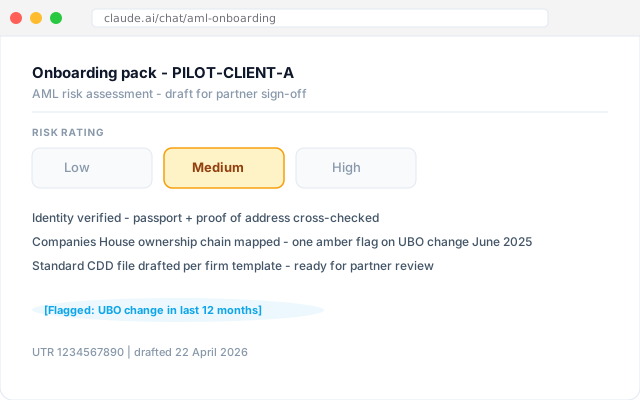
A structured onboarding pack: risk rating with the reasoning, identity check summary, beneficial ownership mapped from Companies House, a flagged-items list, and the client due diligence file drafted to your firm's template. The partner reviews the flags and signs the pack.
Follow-up prompts
- Draft the client-facing welcome letter for this onboarding.
- Run the same onboarding shape across the five new clients coming in this month.
- Compare this new client's risk profile against the three similar clients we took on last year.
Tricks and tips
- Keep a house library of what you treat as a red flag versus an amber. The workflow applies your rules, not a generic rule set.
- Companies House data is the cheap cross-check. Teach the workflow to treat a mismatch there as an amber, not a green.
- For clients with group structures, ask the workflow to map the ownership chain once. That chart becomes the reference for every future year's onboarding review.