Describe the task
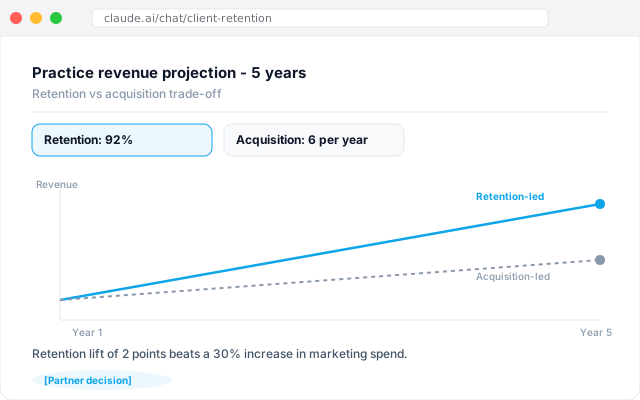
Ask the workflow for the five-year revenue projection for the practice, with retention and acquisition as draggable levers. Frame it as the partner meeting about where the growth budget lands next year. Drag retention up two percentage points, drag acquisition up 30%, and see which curve wins. The reaction is usually what starts the conversation.
Give the workflow context
An AI workflow connected to the practice document store and the time recording system. It reads the current client book size, fee bands by service line, historical churn by cohort, and the marketing cost of acquisition where that is tracked. It respects the partner's view on which clients are strategically important and which are at risk.
What the workflow creates
An interactive projection with sliders the partner can drag live in the meeting. The curve redraws as you move the levers. One-line reads underneath each scenario for what it means for headcount, partner capacity, and fee quality. Ready to show in the partner meeting, not as a pre-baked deck.
Follow-up prompts
- Rerun with a retention lift of 3 percentage points. Then do it with only the top quartile of clients.
- Break the projection down by service line. Which lines are worth retaining and which are quietly leaking value?
- Model the effect of losing our top five clients next year. Where does the shortfall come from?
Tricks and tips
- Start with one service line then add the others. The shape of the curve is easier to read before you stack everything together.
- Treat churn as a lagging indicator. Give the workflow at least two years of history and the projection gets meaningfully better.
- Do not let the projection become the strategy. It is a frame for the partner conversation, not a substitute for it.