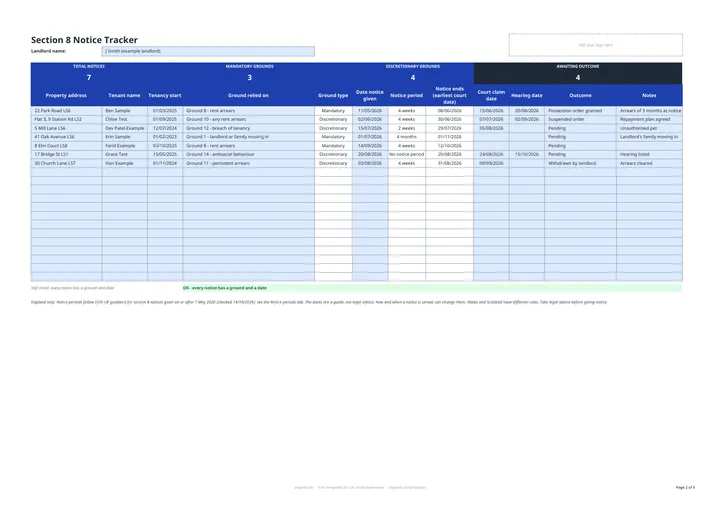
Section 21 no-fault eviction has been abolished in England: no new section 21 notice can be given on or after 1 May 2026. Landlords now need a section 8 notice that relies on a specific ground. This free tracker logs each notice, looks up the notice period for your ground and shows the earliest court date.
Section 21 abolished: what now?
The Renters’ Rights Act 2025 tenancy reforms took effect in England on 1 May 2026. From that date a landlord who wants a tenant to leave must give a section 8 notice and rely on one of the grounds for possession, such as selling the property, moving in, or rent arrears. A section 21 notice given before 1 May 2026 could only be used to start proceedings until 31 July 2026 at the latest, so that route has now closed.
This tracker covers England only. Wales and Scotland have their own systems, and the dates here do not apply there. Grounds that only social landlords can use are left out.
How long are section 8 notice periods?
Each ground has its own period, taken from GOV.UK guidance for notices given on or after 1 May 2026 and checked on 14 October 2026. Some common ones:
| Ground | Notice period |
|---|---|
| 1 Landlord or family moving in | 4 months, and not ending in the first 12 months |
| 1A Selling the property | 4 months, and not ending in the first 12 months |
| 2 Sale by mortgage lender | 4 months |
| 6 Redevelopment | 4 months |
| 7 Death of tenant | 2 months |
| 8 Rent arrears (mandatory) | 4 weeks |
| 9 Suitable alternative accommodation | 2 months |
| 10 Any rent arrears, 11 Persistent arrears | 4 weeks |
| 12 Breach of tenancy, 13 Deterioration of property | 2 weeks |
| 7A Severe antisocial behaviour, 14 Antisocial behaviour | None, but no order for 14 days from the notice date |
Ground 8 also needs at least 3 months’ rent owed (13 weeks if rent is paid weekly or fortnightly), both when you give notice and at the hearing. All 32 grounds the tracker uses are on its Notice periods tab, in blue cells you can update if the law changes.
How does the tracker work out the end date?
It adds the notice period to the date you gave notice, using whole months for month-based grounds and 7-day steps for week-based ones. For Grounds 1 and 1A it also uses the tenancy start date, so the end date never falls inside the first 12 months. The tracker does not allow for deemed-service rules, so treat every date as a guide and take legal advice before you act.
A tenancy ending also changes your rental income. If you keep your property accounts in a spreadsheet, see what Making Tax Digital for landlords means for your quarterly updates.